A Critical Look at the Neoliberal Charitable Model
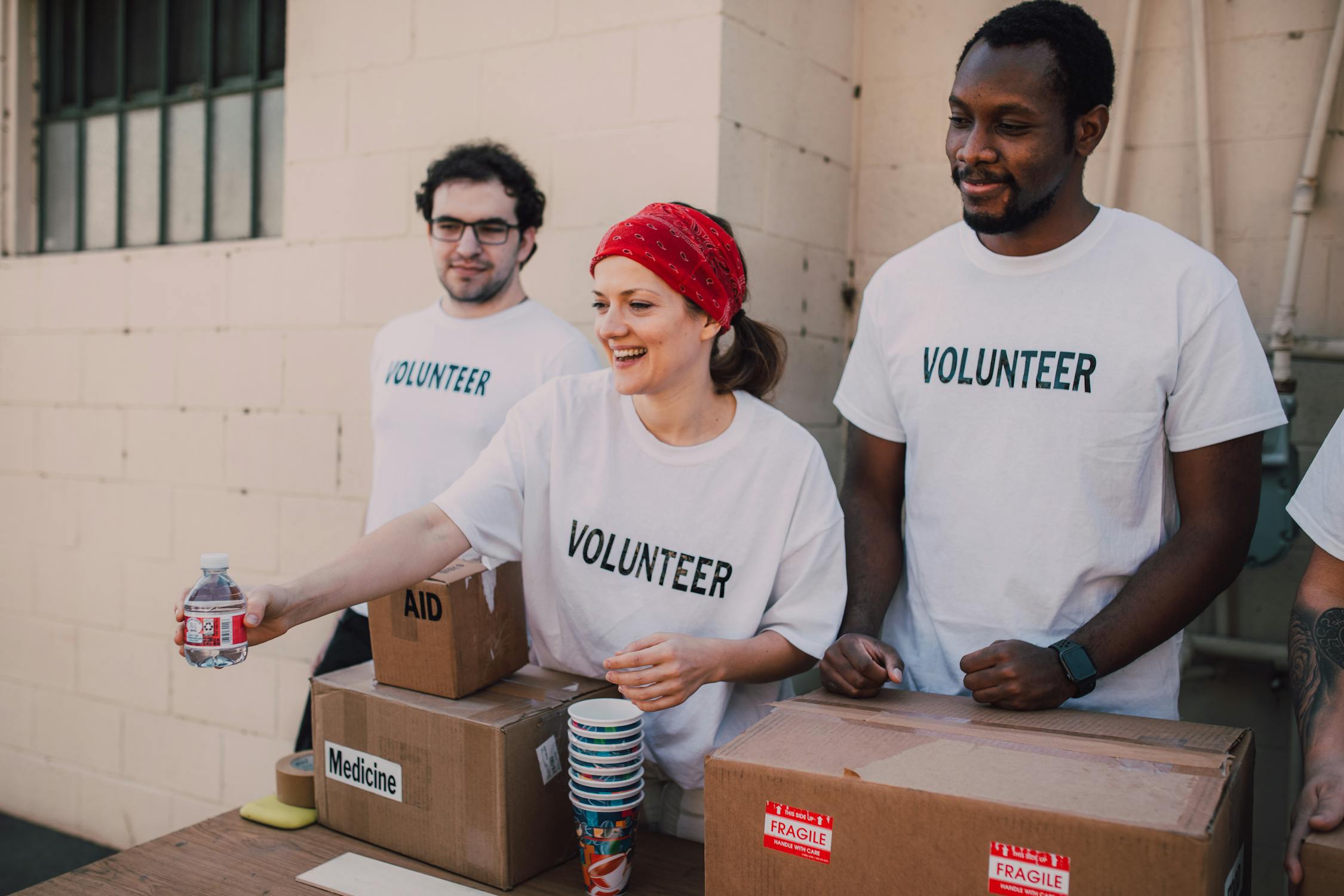
Today, we`re talking about charity and how something so seemingly good can have negative consequences. On the other hand, when you give your money to me on Patreon, that`s a different story, but let`s not dwell on that for now. Instead, we`re focusing on philanthropy, because behind one of the most publicly uncontroversial aspects of our society lies a web of genuinely awful stuff. So, of course, it`s important to talk about it.
Before we dive in, yes, Hasan Minhaj has already written a wildly successful article on this topic. However, as far as I`m concerned, he`s only the second-best Hasan, so it`s like it doesn`t count. Besides, just like the better Hasan, we are actually going to mention the C word: Capitalism. Unlike what Minhaj implies, this is not just a story of people exploiting a broken system; it`s a story of a system that can only survive because people exploit it. But I`m getting ahead of myself. Let`s start with how the scam works.
A thousand lifetimes have seen many give away large sums, earning unwavering support from all of us. Meanwhile, their wealth grows more than they give, yet they receive our full support. Who today dares to say that Bill Gates hasn`t made the world a better place? We could stop there, and we`d already have a compelling argument: Bill Gates made all this money explicitly by being a ruthless, ultra-competitive, inhuman businessman, exploiting his workers and holding a monopoly over the market, only to turn around and launder his reputation with his ill-gotten gains. Article over, capitalism crushed, come back next week. But there`s more because there are at least three problems with high-profile philanthropy:
- it costs the rest of us money,
- it might not be happening at all or only to a tiny extent, and
- it actively undermines democracy. Let`s tackle point number one first: you`re taking my money, big man.
One of the main reasons philanthropists give so much is because of something called the charitable tax deduction. For legal reasons, I am not technically going to explain it in-depth as it requires an in-depth analysis of local law, which varies depending on the state you are situated in. By donating money to an approved charity, anyone can reduce the amount they give in taxes to the government by reducing the amount of money they`re being taxed on. For you and me, that number is usually limited to around 60% of our gross income—the total money we would have received before taxes are taken out. It`s a way for the government to acknowledge that you`re doing a good thing and reward you with slightly lower taxes on your total gross income.
For the ultra-wealthy, those rules technically also apply, but they also get special access to even better, more exclusive rules, just like how their Bored Apes grant them access to better, more exclusive rooms in the metaverse for people who don`t have any friends. For the ultra-wealthy, charitable deductions can be applied to things that aren`t money and that only the wealthy have enough of lying around to give away—real estate properties, stock options, capital gains, and the like. On these assets, the value of which has never been hyperinflated and always definitely represents what it`s worth, the ultra-wealthy can donate amounts that are trivial to them but can end up reducing their taxes by up to 74%, according to two academics who actually know what they`re talking about, unlike the disembodied voice reading these words out loud to himself. And that`s on top of all the other tax avoidance strategies these ultra-rich parasites use on the corporate side, with tax haven companies, loopholes, and the more individual-based avoidance schemes we learned about in the Pandora and Paradise Papers, concretely.
So, what does using the charitable tax deduction like this mean? Well, it means that for every billionaire “giving” a dollar to charity (we`ll discuss how much this actually happens in a moment), you pay 74 cents of it. The truth is that if the government isn`t receiving those 74 cents on the dollar it was planning on getting, it has two options: either spend 74 cents less on stuff that would benefit you, or get those 74 cents from you instead. It`s convenient how that works out.
While the 74-cent figure might sound trivial, the real amount is in the billions. Between 2010 and 2014, the cost the rest of us bore was $246.1 billion. Put all those zeros on screen; I don`t care how much it costs me in graphics animation. That number has likely only increased in recent years, as charitable donations grow in size and deduction laws become more favorable to the ultra-wealthy. If you divide those billions of dollars evenly among all of us over five years, it doesn`t amount to a crazy sum per person. However, it`s money that was meant to be used on us and that we weren`t supposed to be paying for in the first place. We were supposed to benefit from that money, not have it taken out of our pockets.
That brings us to the second part of this whole thing. As much as billionaire-funded charities want to make it seem like they`re genuinely giving away their dollars and putting them back into your hands through their foundations, they`re really not—like, not at all. Oh man, it`s going to blow your mind when you find out in about 10 seconds.
Point number two: where`s that money going, big man? Every time you hear of a guy like Bill Gates giving away, say, 20 garillion dollars to the Gates Foundation, only 5% of that money will actually go to charitable causes—the absolute minimum required by law. What happens to the remaining 95%? It goes into the foundation`s investment portfolio, of course! You can`t run a good charity without hoarding money, right? Don`t believe me? Sources are in the description, as always. I don`t just make this stuff up. It`s Section 4942 of the Internal Revenue Code, and every foundation has clearly understood it to mean “don`t give more than 5%.”
The bottom line is that we are a mere rounding error away from the Gates Foundation using all the money it receives from its key investors, Bill Gates and Warren Buffett, to do precisely the same stuff it would be doing outside the charity: putting it into stocks. Not only that, it`s the kind of stocks that make whatever the foundation is trying to achieve irrelevant. Charitable foundations, including the Gates Foundation, invest in the same profitable companies every other slimy stock portfolio invests in: fossil fuels like BP, Shell, and Total; junk food like McDonald`s and Coca-Cola; mining companies like Rio Tinto; brands politely referred to as agribusiness companies like Nestlé and Unilever; weapons manufacturers like BAE Systems; and many more companies that can easily fit into the “we love to commit human rights abuses” list. Considering this is where 95% of the foundation`s funds go, this is where it has the most impact on the world. For a guy who claims to be all about global health and fighting climate change, it`s quite a paradox.
Now, on to point number three: breaking democracy. Big philanthropy has a direct impact on the democratic process. By funneling money into causes that align with their personal beliefs or interests, these billionaires wield immense influence over public policy and discourse. They can shape the direction of research, development, and advocacy without being held accountable by the public or elected representatives. This concentration of power in the hands of a few ultra-wealthy individuals undermines the very foundations of democracy, where decisions should be made collectively and based on the will of the people.
Gates`s money seems to indicate otherwise, but somehow, this situation gets worse. The remaining 5% meant for actual good doesn`t necessarily do good either. It is often used to make these despicable companies even more profitable by transforming “charitable” projects into regular business investments. Money put into the charity side ends up also benefiting the investment side.
Take just one example: in 2014, the Gates Foundation had $538 million worth of shares in Coca-Cola. That same year, one of its big charitable projects was training 50,000 farmers in Kenya. The president of the Gates Foundation`s global development program said it was all about “empowering small farmers to increase productivity, improve crop quality, and access reliable markets,” which is critical for addressing global hunger and poverty. But what was that project really about? Making that investment in Coca-Cola shares more profitable by training those farmers to produce passion fruit destined for the Coca-Cola Company. Charity for profit—what a dream.
Across the charity`s philanthropic involvement, the story is the same: any giving that yields a profit, be it by adding new workers or more industrialized production, gets the green light. Beyond this incredible perversion of what charity is supposed to be—actually giving money away, you know, charity—billionaire philanthropy also poses a massive democratic problem. That`s point number three: now you do what the big man says.
By playing with massive sums of money, both deciding where that money goes and where it doesn`t, and by taking money away from governments, billionaires effectively decide on policies without democratic approval. They have created their own side government that does whatever they want, allowing them to be their own little dictators. Because their intentions are supposedly benevolent, we often let them do as they please.
Instead of funds being allocated based on collective decision-making, balancing competing interests, and ideally ensuring equitable distribution of money in the interest of equality, billionaires put money wherever they want, doing whatever they please. If Gates just really loves charter schools, now he decides that charter schools get more funding. If he wants more farms for his busy brown drink friends, now a city`s worth of people is going to grow some fruit.
This is a tremendous abuse of power from a guy whose best quality was being picked last for dodgeball in middle school. He is not accountable to anyone; his decisions are entirely his own or those of the people he hires, and we don`t have a say. The results of giving a few individuals who played the system as much say as they want on who gets money and who doesn`t are never good. They already exert enough influence in the workplace, the stock market, the hiring process, and the rest of the economy—now in charity too.
And look, I get that giving money to the US government isn`t great. Our government is garbage, and if we gave it more of this dirty Bill Gates money, we`d get about four minutes of celebration before they blew it all on a new drone to kill innocent people in another country.
Some of the money given to the government would indeed go back to us and could materially improve our lives. The amount we would have a say over, however limited by the more undemocratic parts of our government, would be distributed more fairly and justly than by letting one individual have the final say on all of it—especially when that one person is less than ideal.
Of course, the government can`t do everything, but one person or just a few people pretending they can is far worse. Building our system around allowing someone like Bill to profit off of charity, becoming a glorified leader of sustainable development while stripping everyday people of reasonable pay, rights, and access to common goods, and roping in a new generation of people into undemocratic, exploitative work is, well, bad. Billionaires` charity is just the way they keep this system churning out more people like them.
Oscar Wilde spoke of the charitable bourgeoisie, stating that their remedies do not cure the disease of poverty; they merely prolong it. The proper aim should be to reconstruct society so that poverty would be impossible. It is both immoral and unfair to use private property to alleviate the horrible evils resulting from the institution of private property itself.
The best among the poor are not grateful for charity; they are ungrateful, discontented, disobedient, and rebellious—and rightfully so. Why should they be grateful for crumbs that fall from the rich man`s table when they should be seated at the board, and they are starting to realize this?
The philanthro-capitalist model of charity, embraced by these high-horse-riding technocrats, does not rid the world of poverty. Its sole purpose is to justify the neoliberal model of capitalism that creates it—giving a few rich individuals more money than billions of people put together and only working by keeping a significant chunk of the population in abject poverty. It applies small band-aids to the most gruesome injuries of capitalism, never questioning how so many people got hurt as a consequence.
All the while, these billionaires continue to amass unimaginable wealth, whitewashing their actions behind good intentions and promoting the idea that having a few well-meaning rich individuals is somehow better than having no ultra-wealthy individuals and a well-engineered system that puts enough money into everyone`s hands to live a good life. They put just enough money back into the system to prevent it from boiling over—and that`s it. They think the rest of society is naive and inferior.
In conclusion, billionaire philanthropy is a scam.